
-
 Islamabad
 -
 Islamabad
 -
 English Speaking
 -
 Breakfast and Dinner
 -
 Private transfers, train, domestic flight
 -
 Hotels & Local Homes
 -
 18
18 -

-

-

Trip Overview
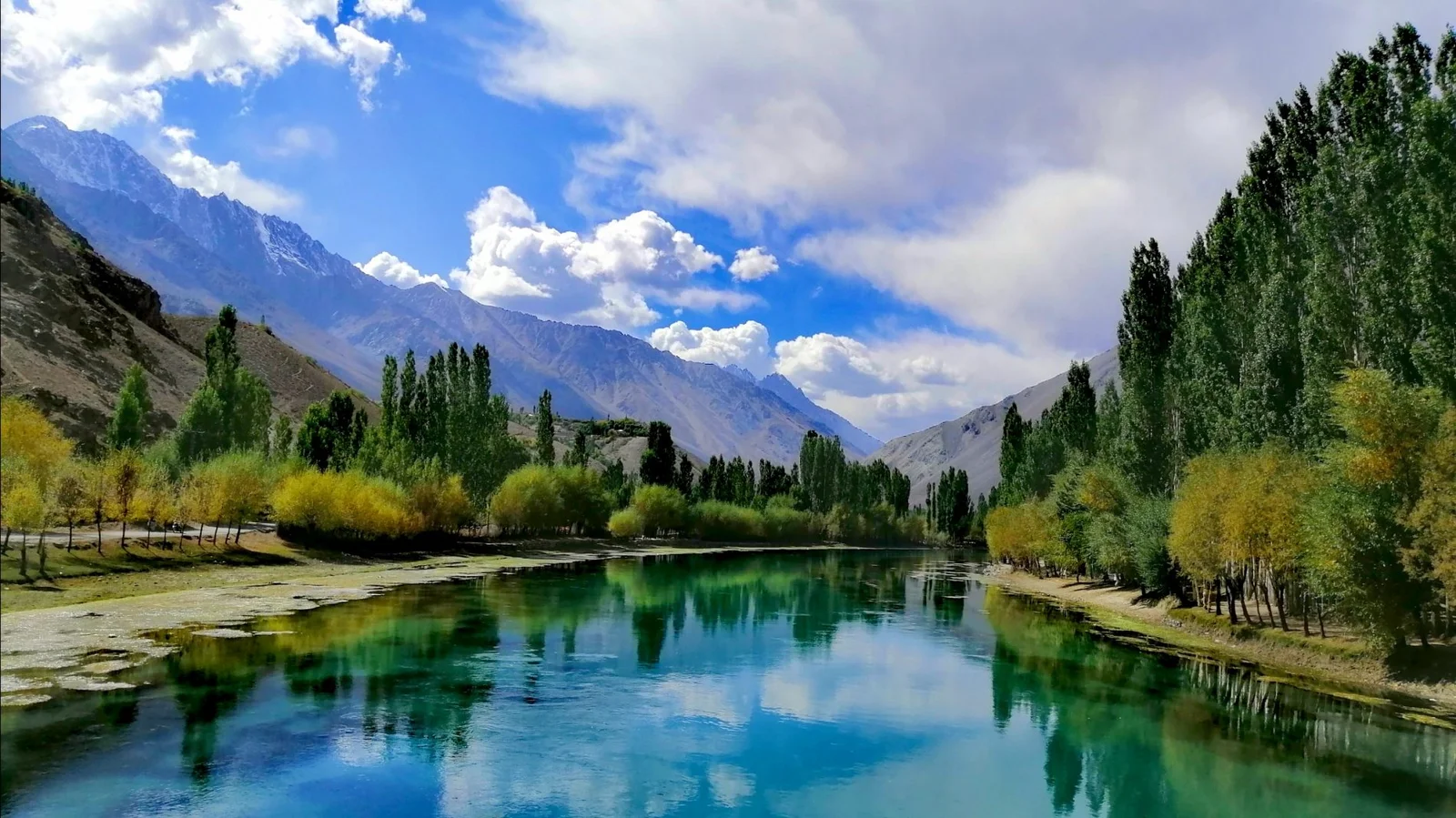
Embark on a 13-day adventure across Pakistan’s breathtaking landscapes and rich cultural heritage. Begin in Islamabad, exploring its Islamic architecture before journeying to Naran for a rendezvous with nature. Dive into Gilgit’s grandeur and Karimabad’s ancient forts, then rise with the sun in Hunza Valley’s Duiker village. Immerse in the vibrant culture of Ganesh village and the natural beauty of Hopper Valley. Conquer the heights of Khunjerab Pass, trek through Ghulkin Glacier, and relax in the serene Fairy Meadows. Choose your own adventure amidst Fairy Meadows’ pine forests or bask in the presence of Nanga Parbat. Bid farewell to Fairy Meadows and return to Naran before ending with shopping and a feast in Islamabad. Depart with cherished memories, ready to share tales of your unforgettable Pakistan adventure.
Itinerary
On arrival at Islamabad International airport, you will be greeted by our guide later transfer to your hotel. In the afternoon city tour of Islamabad followed by the Damn-E-Koh (viewpoint), which gives us a panoramic view of Islamabad before driving past various modern streets and buildings graceful with a touch of Islamic Architecture & Folk Heritage Museum. Our tour culminates at one of the world’s largest mosque – Shah Faisal Mosque.
Overnight at hotel in Islamabad or Rawalpindi. (BD)
In the morning we drive to Naran en-route we will stop at Taxila, Taxila has a well-planned museum and many historic sites of the Gandharan Buddhist civilization. The area flourished from the Sixth Century B.C until the Fifth Century A.D. Later continue driving to Besham.
Overnight at hotel in Naran or Besham. (BD)
** During the summer month this trip can be done via Naran Kaghan valley.
Drive along the Karakorum highway to Gilgit, En-route we will have few stops, our first stop will be at Chilas, rock carving which is dated back between 5000 and 1000 BC, showing single animals, triangular men and hunting scenes in which the animals sometimes are larger than the hunters. These carvings were packed into the rocks with stone tools and are covered with a thick patina that proves their age. Our next stop is the The Junction Point of 3 Greatest Mountain Ranges of the World, Pakistan.
This place of interest is the unique venue where three great mountain ranges of world make a knot. Himalayas, Karakoram and HinduKush, with their famous highest peaks [in Pakistan, and top 2, 3, & 4th in the entire world], Nanga Parbat, K-2 and Tirich Mir, meet here and at almost on same place River Indus, flowing down from lofty mountains of Skardu, joins with river Gilgit, one its main tributaries.
Continue driving to capital city of Gilgit Baltistan.
Gilgit the administrative capital of Gilgit Baltistan and, perhaps, the most spectacular region of Pakistan in terms of its geography and scenic beauty. Here world’s three mightiest mountain ranges: the Karakoram, the Hindu Kush and the Himalayas – meet. The whole of Gilgit Baltistan is like a paradise for mountaineers, trekkers and adventure lovers. The region has a rich cultural heritage and variety of rare fauna and flora. Historically, the area have remained a flash point of political and military rivalries amongst the Russian, British and Chinese empires. Immediately after the end of British rule in the sub-continent in 1947, the people of this region decided to join Pakistan through a popular local revolt against the government of Maharaja of Kashmir.
Overnight at hotel in Gilgit. (BD)
In the morning visit the Kargah Buddha carved on the rock dated from 7th century AD. Later visit Gilgit Bazar, British cemetery after lunch continue driving along the Karakorum highway to Karimabad Hunza valley. Our next stop will be at Chalt Nagar which is the main Karakorum Thrust; the collision point of Indo Pak and Eurasian plate. We will also make a tea stop at Rakaposhi peak (7788 m) view point for photography. Continue driving to Karimabad. Afternoon walk around Karimabad, including a water channel walk. Overnight at hotel in Karimabad. (BD)
Early morning wakeup for sunrise enjoy stunning view of surrounding Mountains, enjoy the stunning sunrise over the snow-capped mountains of Ultar (7388m), Rakaposhi (7788m) and Diran (7266m). Optional hike up toward Ultar glacier base camp. After breakfast return down to Altit village to visit Altit fort, Altit Fort is a spectacularly sited defensive work overlooking the Hunza river valley in Gilgit-Baltistan. Altit Fort was the first of these strongholds to be built with Altit Khun and the Fort being renowned as the original capital and birthplace of Hunza. However later as a result of a conflict between the two sons of the Mir of Hunza, Shah Abbas and Ali Khan, they shifted the capital to Baltit Fort. Ayasho II, Tham / Mir of Hunza in the early 15th Century married Princess Shah Khatoon from Baltistan. As part of her dowry she brought with her architects and tradesman from Kashmir and Tibet. At the time Baltistan (previously known as ‘Little Tibet’) had very strong cultural and ethnical relations with Ladakh in Northern India. The structure of Altit Fort was therefore influenced by the Ladakhi/Tibetan architecture, resembling elements of the Potala Palace in Lhasa, Tibet.
Altit Fort was originally built as a palace, yet some time after its construction, in 1548 A.D a defensive watch tower was added transforming it into a fort. It is believed that the Fort was built in 6 different phases making the most of the various different levels of natural rock from the very high cliff top it is positioned on. Altit Fort was surrounded by the settlement of Altit Khun, once a bustling town for traders and caravans travelling along the Silk Route. The historic village forms an integral part of the core cultural enclave of Hunza. In the aftermath of far reaching socio-political changes in and since 1972 the Fort lost its glory of being the centre of traditional cultural festivals and village life. After this time the ruling family no longer had the power to collect taxes to support the up keep of the fort and it was abandoned and left to deteriorate. In the late 1990’s a prince of the former ruling family of Hunza donated Altit Fort to the Aga Khan Foundation who through the Aga Khan Cultural Services, Pakistan spent the arduous task of restoring and rehabilitating both the fort and the surrounding settlement of Altit Khun. In 2007 the Fort opened as a tourist museum and culture centre for the community. Later visit Baltit Fort which is 700 years, but there have been rebuilds and alterations over the centuries. In the 16th century the Mir (King) married a princess from Baltistan who brought master Balti craftsmen to renovate the building as part of her dowry. The architectural style is a clear indication of Tibetan influence in Baltistan at the time. Overnight at hotel in Karimabad. (BD)
Early morning wakeup for sunrise enjoy stunning view of surrounding Mountains, enjoy the stunning sunrise over the snow-capped mountains of Ultar (7388m), Rakaposhi (7788m) and Diran (7266m). Optional hike up toward Ultar glacier base camp. After breakfast return down to Altit village to visit Altit fort, Altit Fort is a spectacularly sited defensive work overlooking the Hunza river valley in Gilgit-Baltistan. Altit Fort was the first of these strongholds to be built with Altit Khun and the Fort being renowned as the original capital and birthplace of Hunza. However later as a result of a conflict between the two sons of the Mir of Hunza, Shah Abbas and Ali Khan, they shifted the capital to Baltit Fort. Ayasho II, Tham / Mir of Hunza in the early 15th Century married Princess Shah Khatoon from Baltistan. As part of her dowry she brought with her architects and tradesman from Kashmir and Tibet. At the time Baltistan (previously known as ‘Little Tibet’) had very strong cultural and ethnical relations with Ladakh in Northern India. The structure of Altit Fort was therefore influenced by the Ladakhi/Tibetan architecture, resembling elements of the Potala Palace in Lhasa, Tibet.
Altit Fort was originally built as a palace, yet some time after its construction, in 1548 A.D a defensive watch tower was added transforming it into a fort. It is believed that the Fort was built in 6 different phases making the most of the various different levels of natural rock from the very high cliff top it is positioned on. Altit Fort was surrounded by the settlement of Altit Khun, once a bustling town for traders and caravans travelling along the Silk Route. The historic village forms an integral part of the core cultural enclave of Hunza. In the aftermath of far reaching socio-political changes in and since 1972 the Fort lost its glory of being the centre of traditional cultural festivals and village life. After this time the ruling family no longer had the power to collect taxes to support the up keep of the fort and it was abandoned and left to deteriorate. In the late 1990’s a prince of the former ruling family of Hunza donated Altit Fort to the Aga Khan Foundation who through the Aga Khan Cultural Services, Pakistan spent the arduous task of restoring and rehabilitating both the fort and the surrounding settlement of Altit Khun. In 2007 the Fort opened as a tourist museum and culture centre for the community. Later visit Baltit Fort which is 700 years, but there have been rebuilds and alterations over the centuries. In the 16th century the Mir (King) married a princess from Baltistan who brought master Balti craftsmen to renovate the building as part of her dowry. The architectural style is a clear indication of Tibetan influence in Baltistan at the time. Overnight at hotel in Karimabad. (BD)
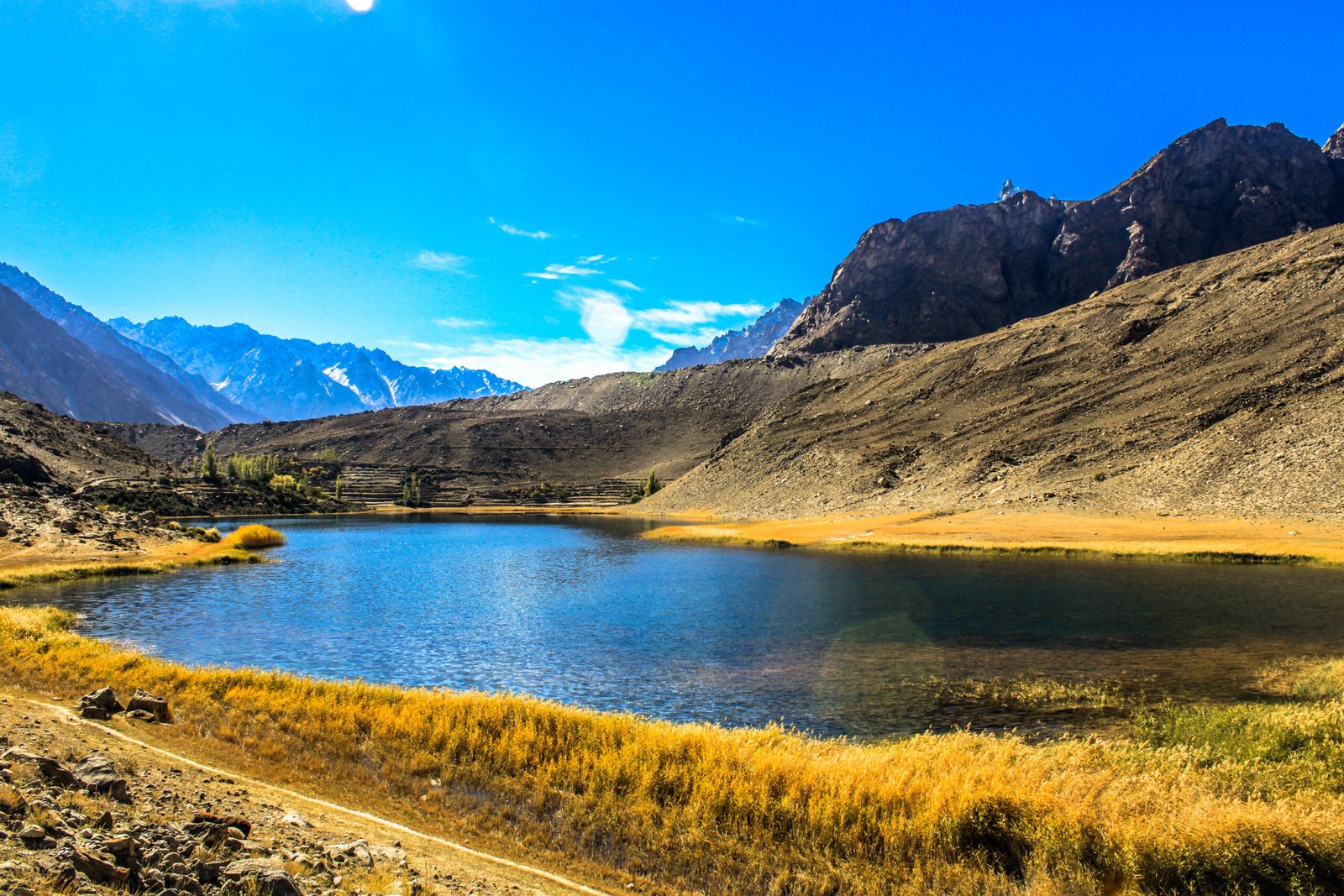
In the morning we drive to Borith Lake. Our first stop is Ganish village, we visit the world heritage site Ali Gohar’s old house, next we will do a side trip to Hopper valley which can be seen from Duiker is on the opposite, eastern side of the Hunza River. This is another fertile valley and is predominantly Shia Muslim. This is one of the world’s fastest moving glaciers at Hoper. Later drive to upper Hunza Gojal, we will stop by Atta Abad Lake for photography, and afternoon drive to hike toward the Passu glacier viewpoint.
Overnight at Borith Lake hotel & Resort. (BD)
oday you will be driving to the highest paved international border crossing in the world and the highest point on the Karakoram Highway Khunjerab pass (4750 M). Along the way you will be able to see some wildlife at Khunjerab national park. Return back to Passu village, walk around the village, later visit Hussaini village, where we try to cross the hanging bridge, here you have chance to test our fear of heights and wobbly wooden plank walks while be mesmerized by the fast-flowing waters below. Overnight Borith Lake hotel and Resort. (BD)
In the morning we hike through Ghulkin glacier to Ghulkin village, after a picnic lunch with a local family, we continue our hike via Kamaris village to Gulmit. Gulmit is a peaceful and serene village that formerly served as a summer capital of the Hunza Kingdom. Here one will walk through the village, visit a 400 year-old house, and see local women weaving carpets and making several other traditional handicrafts. Visit local museum. (Those who do not wish to hike can drive to Ghulkin village instead)
Later return to Borith Lake for overnight. Overnight at Borith Lake hotel and Resort. (BD)
In the morning we drive on the Karakorum highway to Raikot Bridge where we change into local 4×4 wheel drives and carry on driving to Tato. From there we will start short trek to the lush green area of Fairy Meadows. Overnight in Huts at Fairy Meadow. (BD)
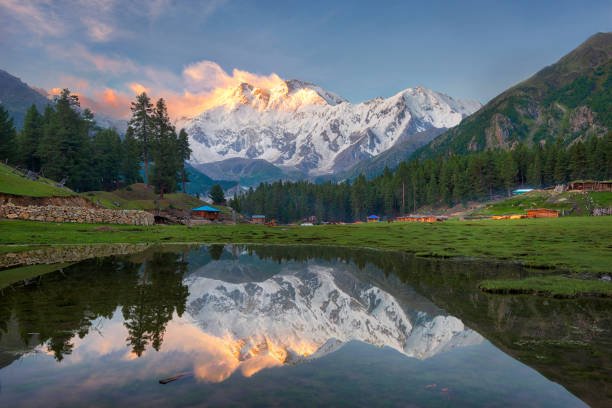
Today we have an opportunity to hike through the pine forest toward Bayal base camp or you can just relax at Fair Meadow and enjoy the beautiful view of Nanga Parbat mountain rage.
Overnight in Huts at Fairy Meadow. (BD)
In the morning trek down to Tato where we catch jeeps to Raikot Bridge. Continue driving back to Naran or Besham. Overnight at hotel in Naran. (BD)
Drive to Islamabad. Last minute shopping. Farewell dinner at one of the local restaurant.
Overnight at hotel in Islamabad. (BD)
Our service will end with airport transfer. (B)
Includes/Excludes
What's included?
- All private transfers by Jeep, Car, Van, Busses depend on the group size
- Twin sharing accommodation at hotels mentioned above with private facilities, Two nights at Raikot Sarai in Huts with communal facilities.
- Meals half board: Key (B) Breakfast (D) Dinner
- All the sightseeing tours as described in the itinerary and entrance fees
- Fully escorted by an experienced local English speaking guides in each country
- Visa support letters if required
What is excluded?
- Expenses in hotels such as laundry, telephone and room service, etc.
- Optional activities
- Meals, not mentioned above
- Personal expanses
- Single supplements
- Tips for Guides and drivers
- Early check in hotels and late checkout
FAQ
It’s a 13 days Trip
© 2025 Hunza Discovery Tours (Pvt) Ltd
Site Developed by